
A well-built road trip feels effortless, but the ease is engineered: you decide what matters, you reduce avoidable risk, and you leave generous space for surprises. The smartest planning isn’t obsessive; it’s selective. You lock the essentials early—route logic, high-demand reservations, critical vehicle readiness—then you keep the rest flexible so the trip can breathe.
This same “lock the structure, flex the details” mindset shows up in modern entertainment franchises, where casting debates and fan predictions can spiral quickly; people chase scraps of certainty as if an immersive roulette game could settle the anxiety mid-sentence, even though real outcomes still depend on schedules, contracts, and careful messaging. In both travel and public narratives, the pressure comes from scarcity: scarce campsites, scarce time, scarce verified information.
Route Design: Build a Reliable Spine, Not a Perfect Line
Start with a “route spine”—a sensible, resilient backbone—before you decorate it with scenic detours. The most expensive road trip mistakes often begin as romantic ideas: too many miles per day, too many “quick” side stops, and not enough time for traffic, weather, or fatigue.
A practical route design checklist:
- Daily distance cap: Set a conservative maximum that matches your group’s stamina. A shorter day with a calm arrival can be more valuable than a longer day with a frantic finish.
- Two-layer navigation: Map a primary route and a backup route that avoids chokepoints. The backup isn’t pessimism; it’s insurance.
- Time buffers: Add explicit slack around border crossings, mountain passes, ferry schedules, and urban rush hours.
- Fuel and rest rhythm: Mark predictable stops (every few hours) to keep decision-making simple and safe.
- “Anchor nights” vs. “floating nights”: Decide which nights must be in specific places (events, must-see sites) and which nights can move if conditions change.
Analytically, you’re reducing variance. A route with fewer fragile dependencies is cheaper in money, energy, and conflict.
Reservations: Book the Bottlenecks Early, Let the Rest Stay Light
Road trips look spontaneous on social media, but peak-season reality is capacity-constrained. If you want charming locations, convenient parking, and restful sleep, you book the bottlenecks early and keep flexibility where supply is abundant.
Reservations to prioritize now:
- High-demand lodging corridors: Coastal stretches, famous national parks, and small resort towns can sell out fast.
- Campgrounds and limited-entry areas: Many sites operate with strict quotas, and last-minute availability can be brutal.
- One “hard” activity per day (max): If an activity requires timed entry, build the day around it; don’t stack multiple rigid appointments.
Items that can often wait:
- Most meals: Keep a shortlist of strong options, but avoid turning dinner into a daily deadline.
- Minor attractions: Save these for weather-dependent decisions.
- Optional detours: Put them on a “nice-to-have” map layer so you can drop them without regret.
The goal is a graceful plan: decisive where scarcity is real, loose where spontaneity creates joy.
Vehicle Maintenance: Quiet Reliability Beats Flashy Optimism
A road trip’s most valuable feature is boring reliability. Maintenance is not glamorous, but it’s the difference between an adventurous story and a preventable crisis.
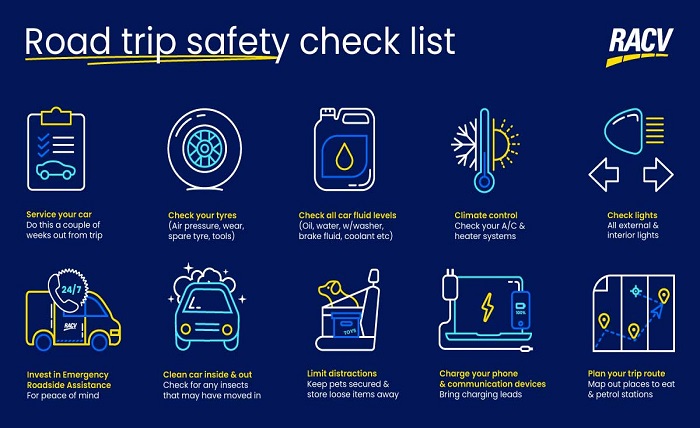
Do these checks now, not the day before:
- Tires: Inspect tread depth, sidewall condition, and pressure. Confirm your spare is usable and inflated.
- Brakes and fluids: Check brake responsiveness and top up essential fluids; address leaks early.
- Battery and lights: Test battery health and verify all external lights. Small failures become costly in rural areas.
- Cooling and climate systems: Overheating ruins days quickly; ensure the cooling system is stable.
- Wipers and visibility: Replace worn blades and carry washer fluid; poor visibility is a safety hazard, not an inconvenience.
Also prepare a practical kit:
- Reflective triangle, basic first-aid supplies, flashlight, gloves, phone charging options, simple tools, and water.
- Paper copies or offline access to key documents and reservations, in case connectivity is patchy.
This is not fear-based planning—it’s probability-based planning.
Budget and Contingencies: Price the Unknowns, Then Protect Your Buffer
Road trip budgets fail when “small extras” quietly accumulate: extra fuel from detours, toll surprises, parking fees, impulse snacks, and last-minute lodging upgrades after an exhausting day.
A resilient budget includes:
- Baseline costs: Fuel estimate by distance and consumption; average toll/parking assumptions; lodging and major activities.
- Variable category: A daily discretionary amount for snacks, small attractions, and comfort upgrades.
- Contingency buffer: A protected reserve for repairs, medical needs, weather reroutes, or an unexpected extra night.
A useful rule: if the buffer disappears early, you change behavior immediately—shorten drives, reduce paid attractions, or swap a pricey location for a simpler one. The buffer isn’t “extra”; it’s structural.
Casting Choices and Fan Expectations: Why Pressure Distorts Decisions
Large franchises operate under a different kind of road-trip constraint: the route is production logistics, the reservations are talent schedules, and the maintenance is brand stewardship. Casting choices become lightning rods because they represent more than a person—they symbolize direction, tone, continuity, and perceived respect for an audience’s emotional investment.
Under pressure, decision-makers often optimize for:
- Schedule feasibility: Availability can override “ideal” options.
- Public defensibility: A choice that can be explained cleanly may beat a choice that is artistically risky.
- Expectation management: Messaging may be calibrated to reduce backlash rather than maximize surprise.
Fans, meanwhile, often evaluate the decision as a referendum on identity. That’s why debates can become intense, personal, and persistent—even before anything is officially confirmed.
What’s Public vs. What’s Alleged: A Clean Framework for Fast-Moving Claims
Both road trips and casting news produce rumors. On the road, the rumor might be a “closed pass” report or a “two-hour delay” prediction. In entertainment, the rumor is often a negotiation claim or an unnamed “insider” assertion. The analytical response is the same: classify information by accountability.
- Public: Verified announcements, official updates, direct statements, documented closures.
- Reported but provisional: Credible updates that still allow for change (construction timelines, negotiations, “in talks”).
- Alleged: Anonymous tips, screenshots without context, or claims that can’t be independently confirmed.
Treat alleged information as a hypothesis, not a verdict. Acting on it too strongly creates avoidable damage: wasted bookings on the road, or reputational harm in public discourse.
How Reputations Get Managed When Plans Shift
When a road trip goes wrong, reputations inside the group can suffer: who planned the route, who insisted on the detour, who forgot the reservation. The best groups manage this by focusing on systems, not scapegoats—fix the process, reduce blame, preserve morale.
Franchises do something similar at scale:
- Process framing: Emphasize creative fit, scheduling realities, and iterative decisions.
- Careful phrasing: Avoid overpromising before contracts and calendars are stable.
- Staged disclosure: Release information gradually to reduce emotional whiplash.
- Boundary setting: Distinguish confirmed facts from speculation without inflaming the crowd.
Good reputation management isn’t deception; it’s disciplined clarity under uncertainty.
Closing Checklist: Structure First, Narratives Second
For your road trip, lock the essentials early: a sturdy route spine, the scarce reservations, and the unglamorous maintenance that prevents dramatic breakdowns. Keep buffers generous and optional details light. For casting chatter and franchise pressure, apply the same discipline: anchor yourself to what’s confirmed, treat unverified claims as provisional, and remember that reputations—like road trips—are often won or lost in the quiet moments of planning.